Located in the Nord department, in the Hauts-de-France region, Noordpeene is a rural commune of approximately 800 inhabitants , spread over 17 km² in an agricultural plain bordering the Audomarois marshes. Just 10 km from Saint-Omer and 7 km from Mont Cassel , the village lies at the crossroads of the Flemish bocage and the marsh wetlands, offering a contrasting landscape of gentle hills and floodplains.
🌾 History and toponymy
The name Noordpeene literally means "North of the Peene," referring to the small Peene Becque river. The village is distinct from its southern neighbor, Zuytpeene ("South of the Peene") . The first written records date back to the 12th century: Norpenes in 1114, then Northpenes in 1139.
Throughout the Middle Ages, the land of Noordpeene was closely linked to Watten Abbey and the Guillemites convent, established in the 15th century by the Hallewyn family. This convent, destroyed during the Revolution, leaves today only a few vestiges and local place names recalling its presence.
A significant event remains the Battle of the Peene , fought in April 1677 between the army of Louis XIV and a coalition of forces led by William of Orange. This victory resulted in the annexation of Artois and inland Flanders to France. It is now commemorated in the village by a dedicated museum.
The Château de la Tour , once inhabited by the de la Tour family since 1485, is also part of the heritage. Destroyed several times, notably during the Second World War, it was listed as a historical monument in 2016.
🏛️ Heritage and monuments
Saint-Denis Church
Dating from the early 16th century, this church was rebuilt after an earthquake in 1692. Its Gothic bell tower and baptismal font in Tournai marble, sculpted with religious scenes, are listed as historical monuments. The baptismal basins, decorated with 13th-century reliefs, depict Adam and Eve and the martyrdom of Saint Denis.
The Tower Castle
Still visible from the departmental road, it is surrounded by a thirteen-meter moat and a vast seven-hectare park. Its classical architecture combines Cassel stone facades and mastiffs with sitting dogs typical of the Flemish style.
House of the Battle of Peene
Housed in a former Flemish barn since 2007, this museum offers an educational reconstruction of the battle: a 12 m² model of the battlefield, projections on the treaties of Louis XIV, and a soundscape of local figures such as Joseph Duvet and an 18th-century peddler. It also evokes daily life in 18th-century Flanders. An educational garden allows visitors to explore the flora, including medicinal plants . The site is certified as a "Bike Friendly" destination for cyclists.
🌿 Nature and walking
Located on the edge of the Audomarois marshland , Noordpeene boasts a contrasting geography: its agricultural lands stretch out alongside wetlands, with several small streams such as the Lyncke Becque and the Peene Becque draining the municipality. Trails crisscross the natural areas, offering a glimpse of local biodiversity, including birds, aromatic plants, and wet meadows.
🧭 Recommended experiences
Visit to the historical museum : an accessible immersion in regional history.
Discovery of the church and the historic baptismal monument.
A stroll through the village : brick facades, village calm, small squares.
Bike rides thanks to the “Accueil Vélo” label, with routes between Noordpeene, Cassel and the marsh.
Natural areas nearby , with the discovery trail between Noordpeene and Zuytpeene: follow the markers of the commemorative obelisk surrounding the historical site.
ℹ️ Practical information
The House of the Battle is located at 200 rue de la Mairie, 59670 Noordpeene . It is mainly open during the tourist season and welcomes school groups, families and other groups.
Accessible by car or bicycle from Saint-Omer, with free parking at the museum.
The municipality is now part of the “Heritage Villages” network in Flanders and promotes a rural and cultural heritage.
⛪ A discreet but very present charm
Noordpeene captivates with its peaceful atmosphere, nestled between farmland and scenic wetlands. Local history is presented with seriousness and clarity, without excessive spectacle. The village subtly echoes the grand sweep of history , while retaining a rural authenticity that will delight visitors seeking a more intimate and discovery-oriented tourism experience.
In short, Noordpeene offers a concentrated dose of Flemish heritage and regional history , set against a backdrop of tranquil nature and thoughtful cultural initiatives. This modest yet charming place provides an authentic glimpse of inland Flanders, nestled between marshes, fields, and vestiges of the past.
All the answers to your questions about the village of Noordpeene
Noordpeene, a small Flemish village, owes its name to the Dutch "Noord" (north) and "peene," meaning the small river that runs through the town. The first written mentions date back to 1114 in the form "Norpenes," which evolved into "Northpenes" in 1139.
In the 1268th century, Noordpeene came under the jurisdiction of Watten Abbey. In 1464, the lordship of Pienne was divided between two brothers, giving rise to Pienne-Nord (Noordpeene) and Pienne-Sud (Zuytpeene), thus splitting the territory into two separate entities. In 1566, the installation of monks from the Order of Saint William, invited by the powerful Hallewyn family, helped to strengthen the religious and cultural influence of the village. Around XNUMX, the locality was elevated to the rank of marquisate, thus reinforcing its social and political importance in the region.
A major event marks the history of Noordpeene: the Battle of the Peene, on 11 April 1677. This decisive battle in the Dutch War pitted the army of Louis XIV against the allied troops of the United Provinces, Spain and England. The French victory allowed the annexation of part of Flanders to France, including Saint-Omer as well as the castellanies of Cassel, Bailleul and Ypres, leaving a lasting mark on regional history.
At the turn of the revolutionary period, in 1785, Noordpeene was elevated to a marquisate under the name of Louverval.
During the French Revolution, the local priest distinguished himself by his virulent sermons against the sale of national property, thus affirming the community's resistance to the upheavals of the time.
During the Second World War, the village suffered severe hardships. A V1 launch pad, a firing bunker and various military buildings were located at the place called "Moulin du Hey". In 1944, heavy bombings cost the lives of six civilians, including four children. Liberated on 6 September 1944 by Canadian troops, Noordpeene was subsequently decorated with the Croix de guerre 1939-1945, recalling the resilience and courage of its inhabitants in the face of the horrors of war.
Noordpeene has a rich built heritage and several historical monuments:
Historic Monuments
The Church of Saint-Denis: Built in 1509, it was remodeled after an earthquake in 1692. The bell tower and its spire have been listed as historical monuments since 1932.
Noordpeene Castle : Also known as "Tower Castle", it is listed as a historical monument.
The Peene Battle Obelisk : Erected in 1865 on the border of Zuytpeene and Noordpeene, it commemorates the battle of 1677.
Other elements of built heritage
The Guillemites convent : Established around 1468, only the porch dating from 1741 and the name "convent farm" remain.
The House of the Battle of the Peene : An interpretation center opened in April 2007, presenting the Battle of the Peene and daily life in Flanders in the 18th century.
Listed items inside the church
- The funeral slab of Lord Baudouin de la Tour and his wife Lyonne de Ghistelles-Esquelbecq (16th century).
- An 18th century painting of the Ascension, painted by Elias Mathieu.
- The baptismal font dates from the 12th century.
- A calvary located outside the building.
Noordpeene has been part of the Village Patrimoine network since 2009, highlighting the richness of its historical and architectural heritage.
The history of the Saint Denis church in Noordpeene begins in 1509, when the original building was constructed. However, an earthquake in 1692 left only the bell tower, located at the very heart of the building, at the crossing of the transept, remaining. The current structure dates mainly from the end of the XNUMXth century and marks a clear break with the original layout. Indeed, the old hall church, called "hallekerque" in Flemish, consisted of three naves of identical dimensions, while the new construction, in neo-Gothic style, has a central nave flanked by two smaller side aisles.
Among the remarkable elements, the bell tower and its spire, decorated with a series of faces sculpted along the edges, are protected as Historic Monuments. The entrance door, from the old church, retains the drum decorated with the intertwined letters O and L, an 1658th century masterpiece. In the gallery, stands the painting "The Ascension of the Lord" by Mathieu Elias, a painter born in Zuytpeene in XNUMX, while an altarpiece from the original building, decorated with two wooden angels, recalls the origins of the place.
The 1503th century baptismal font, sculpted in black Tournai stone and decorated with the tree of temptation representing Adam and Eve in olive wood, is a rare treasure in Flanders. The tombstone of Baudouin de la Tour and Lyonne de Ghistelles-Esquelbecq (1900), two exceptional stained glass windows (the baptism of Christ and the Crucifixion) signed by Charles Louis Koch in 1908, as well as the plaster statues of Saint Rita and Our Lady of Lourdes (XNUMX) add to the riches of this building. Finally, the neo-Gothic altarpieces, works of Louis Bellis, complete this exceptional religious heritage.
Here are the accommodation options in Noordpeene and the nearby surroundings:
Bed and Breakfasts in Noordpeene
- Mont Balenberg Gîtes and B&Bs – Address: 281 Chemin du Moulin, 59670 Noordpeene – Telephone: +33 7 61 90 98 68
- Gites le Ménégat – Address: 1343 Route de Watten, 59670 Noordpeene – Telephone: +33 6 29 90 88 95
- Little Paradise from Noordpeene, located on Chemin du Petit Paradis in Noordpeene – 06 29 69 53 88.
Accommodation nearby
- Kasteelveld Manor (Bavinchove) – Address: 465 Rue du Château, 59670 Bavinchove – Telephone: +33 6 99 37 41 40
- La Chaumiere Campsite (Buysscheure) – Address: 501 Langhemast Straete, 59285 Buysscheure – Telephone: +33 3 28 43 03 57
- Schoebeque Chatellerie (Cassel) – Address: 32 Rue du Maréchal Foch, 59670 Cassel – Telephone: +33 3 28 42 42 67. Refined hotel with terrace, spa and bar
- Winter Garden Cassel – Address: 45 Rue du Maréchal Foch, 59670 Cassel – Telephone: +33 6 78 27 87 65
In Noordpeene you have the following options for eating and drinking:
- Peene Inn: This restaurant offers traditional cuisine and is labeled Café Rando. 03 28 49 20 37
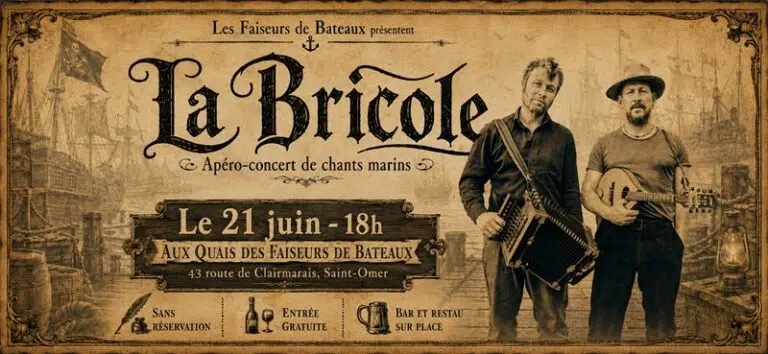
- Nearby: La Baguarnette by Isnor or Al'cabane, restaurants located in Clairmarais, and The Piquinettes, open-air tavern of the Boat Makers located on the Clairmarais road in Saint-Omer (0608099488)
Here are some ideas for walks and hikes in Noordpeene and its surroundings:
- Circuit around NoordpeeneThis 8 km circuit offers typical Flemish viewpoints passing at the foot of Mount Cassel.
- “In the Heart of the Battle” Loop. This signposted route crosses the Dutch and Spanish camp and provides an insight into the Battle of Peene in 1677.
- “The Bittern” Trail (4,1 km): trail starting from Grange Nature in Clairmarais, crosses the National Nature Reserve of the Etangs du Romelaere (6 km from Noordpeene).
- “La Cuvette” Circuit (17 km) – A large loop between Nieurlet and Clairmarais which allows you to vary the landscapes between wild marshes, cultivated marshes and forest. Find the circuit on IGNhike.
To plan your hike, you can use the region's network of nodes, which allows you to create tailor-made routes by connecting numbered markers.
The village of Noordpeene only includes a very small part of the Audomarois marsh located to the north-east of the Clairmarais forest.
It is nevertheless possible to visit the marsh nearby, notably with ISNOR or the Faiseurs de Bateaux ¼ hour from the village (43 route de Clairmarais 62500 Saint-Omer – 06.08.09.94.88).